月亮会变,星星会带路
晚上抬头看,你会发现月亮有时圆、有时像一条弯弯的线,每天的样子都不一样。夜空里的星星也不是乱放的,人们把它们连成图案,还用来找方向。这一课我们要找出两个答案:月亮的形状为什么会改变?星座有什么用处?
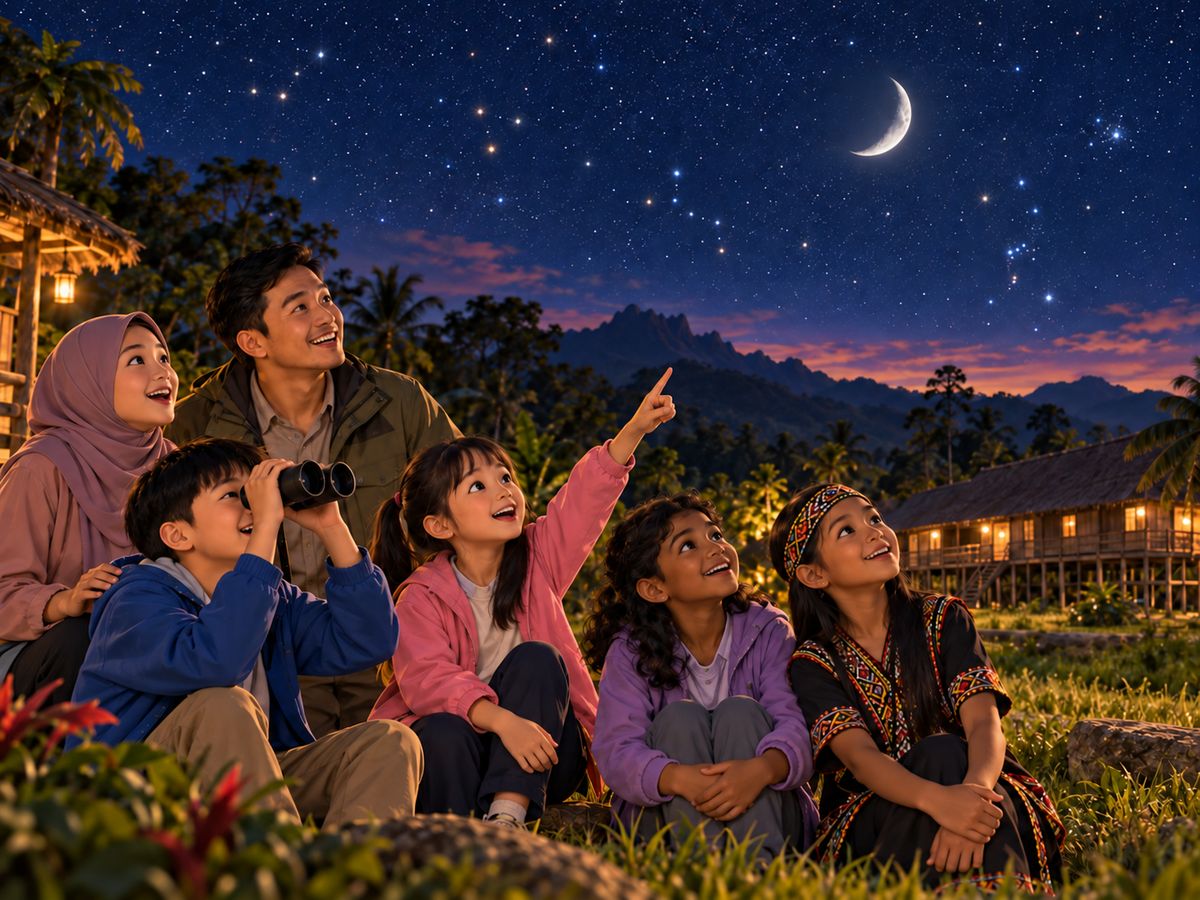
fasa bulan dan buruj = 月相和星座
Pada waktu malam, bentuk bulan yang kita lihat berubah dari hari ke hari. Kadang-kadang bulan kelihatan bulat, kadang-kadang hanya seperti garis melengkung. Bintang di langit pula boleh disambung menjadi corak yang membantu manusia. Dalam pelajaran ini kita akan mencari sebab bentuk bulan berubah dan kegunaan buruj.
Contoh: Seorang nelayan di Semporna memerhati bulan setiap malam selama sebulan dan melukis bentuknya.
Awas: Bulan tidak benar-benar berubah bentuk; hanya bahagian yang kita lihat berubah.
phases and constellations = 月相和星座
At night, the shape of the Moon we see changes from day to day. Sometimes it looks round, and sometimes it is only a thin curved line. The stars can also be joined into patterns that help people. In this lesson we will find out why the Moon changes shape and what constellations are used for.
Example: A fisherman in Semporna watches the Moon every night for a month and sketches its shape.
Watch out: The Moon itself does not really change shape; only the part we see changes.
月球本身不会发光
月球是地球的天然卫星。月亮虽然又圆又亮,但它不是光源,本身不会发光。太阳光照射到月球表面,月球把太阳的光反射出来,所以我们在夜空中看到明亮的月亮。这就像路边的反光板:车灯照到它,它才亮起来。太阳就像车灯,月球就像反光板。
memantulkan cahaya = 反射光
Bulan ialah satelit semula jadi Bumi. Walaupun bulan kelihatan terang, ia bukan sumber cahaya kerana ia tidak mengeluarkan cahayanya sendiri. Cahaya matahari sampai ke permukaan bulan, kemudian bulan memantulkan cahaya itu ke Bumi. Matahari seperti lampu kereta, manakala bulan seperti papan pemantul di tepi jalan.
Contoh: Pemantul pada basikal bersinar hanya apabila lampu kereta menyuluhnya.
Awas: Bulan terang tidak bermaksud bulan ialah sumber cahaya.
reflect light = 反射光
The Moon is the natural satellite of the Earth. Even though it looks bright, the Moon is not a source of light because it does not give out its own light. Sunlight reaches the surface of the Moon, and the Moon reflects that light to the Earth. The Sun is like a car headlight, while the Moon is like a roadside reflector.
Example: A bicycle reflector shines only when a car headlight falls on it.
Watch out: A bright Moon does not mean the Moon is a source of light.
活动:借用太阳的光
我们可以在黑暗的房间里模拟月光。用手电筒代表太阳,镜子代表月球,地球仪代表地球。手电筒的光照在镜子上,调整镜子的角度,光就被反射到地球仪上。这说明月球不必自己发光,只要把太阳光反射过来,地球就会被照到。使用手电筒时,不可照向同学的眼睛。
model pantulan = 反射模拟
Dalam aktiviti ini, lampu suluh mewakili matahari, cermin mewakili bulan dan glob mewakili Bumi. Cahaya lampu suluh jatuh pada cermin, kemudian cermin memantulkan cahaya itu ke glob. Model ini menunjukkan bahawa bulan hanya memantulkan cahaya matahari. Jangan halakan lampu suluh ke mata rakan.
Contoh: Kepingan aluminium boleh menggantikan cermin kerana permukaannya berkilat.
Awas: Cermin tidak mewakili matahari kerana cermin tidak menghasilkan cahaya.
reflection model = 反射模拟
In this activity the torch stands for the Sun, the mirror stands for the Moon and the globe stands for the Earth. Light from the torch falls on the mirror, and the mirror reflects it onto the globe. The model shows that the Moon only reflects sunlight. Never point the torch at anyone’s eyes.
Example: A piece of shiny aluminium foil can replace the mirror.
Watch out: The mirror does not stand for the Sun because it makes no light of its own.
为什么晚上我们能看见明亮的月亮?
sumber cahaya = 光源
Fikirkan sama ada bulan menghasilkan cahaya sendiri atau tidak. Objek yang menghasilkan cahaya sendiri dipanggil sumber cahaya, contohnya matahari dan lampu. Objek lain hanya kelihatan terang apabila cahaya jatuh padanya dan dipantulkan ke mata kita. Pilih jawapan yang menerangkan dari mana cahaya bulan datang.
Contoh: Cermin di bilik gelap tidak bersinar sehingga lampu dipasang.
light source = 光源
Think about whether the Moon makes its own light. An object that gives out its own light is called a light source, such as the Sun or a lamp. Other objects only look bright when light falls on them and bounces into our eyes. Choose the answer that explains where moonlight comes from.
Example: A mirror in a dark room does not shine until a lamp is switched on.
月球的自转
月球绕着自己的轴转动,这叫作自转。月球自转的方向是由西向东,转完一周大约需要 27⅓ 天。地球自转一周只要一天,月球却要将近一个月,所以月球转得比地球慢多了。
putaran bulan = 月球自转
Bulan berputar pada paksinya sendiri. Putaran ini berlaku dari arah barat ke timur. Bulan mengambil masa kira-kira 27 1/3 hari untuk membuat satu putaran lengkap. Bumi berputar sekali dalam satu hari sahaja, jadi bulan berputar jauh lebih perlahan.
Contoh: Bola pingpong yang dicucuk pada lidi berputar apabila lidi dipusingkan.
Awas: Putaran ialah berpusing pada paksi sendiri, bukan mengelilingi objek lain.
rotation of the Moon = 月球自转
The Moon spins on its own axis, and this is called rotation. It rotates from west to east. One complete rotation takes about 27 1/3 days. The Earth rotates once in just one day, so the Moon spins much more slowly.
Example: A ping-pong ball on a skewer spins when the skewer is twisted.
Watch out: Rotation means spinning on its own axis, not travelling around another object.
月球的公转
月球自转的同时,也沿着轨道绕着地球转动,这叫作公转。月球公转的方向也是由西向东,完成一周公转也大约需要 27⅓ 天。所以,月球自转和公转的方向一样,所需的时间也一样。
peredaran bulan = 月球公转
Semasa berputar pada paksinya, bulan juga bergerak mengikut orbit mengelilingi Bumi. Pergerakan ini dipanggil peredaran. Arah peredaran bulan juga dari barat ke timur. Satu peredaran lengkap mengambil masa kira-kira 27 1/3 hari, sama seperti masa putarannya.
Contoh: Bulan bergerak mengelilingi Bumi seperti pelari mengelilingi trek di padang.
Awas: Peredaran bermaksud mengelilingi Bumi, bukan berpusing pada paksi sendiri.
revolution of the Moon = 月球公转
While spinning on its axis, the Moon also travels along an orbit around the Earth. This movement is called revolution. The Moon revolves from west to east as well. One complete revolution takes about 27 1/3 days, the same as one rotation.
Example: The Moon travels around the Earth like a runner going round a track.
Watch out: Revolution means travelling around the Earth, not spinning on its own axis.
为什么总是看到月球的同一面?
因为月球自转一周和公转一周的时间相同,月球绕地球走一圈的同时,自己也刚好转了一圈,所以月球总是用同一面对着地球。我们在地球上看到的,永远是月球的同一面。可以在操场上模拟:一人当地球站在中间,另一人当月球,一边绕圈一边转身,脸一直朝向“地球”。
permukaan yang sama = 同一面
Masa putaran dan masa peredaran bulan adalah sama. Apabila bulan selesai mengelilingi Bumi sekali, ia juga sudah berputar sekali. Oleh itu, permukaan bulan yang sama sentiasa menghadap Bumi. Cuba main peranan di padang: murid bulan berjalan mengelilingi murid Bumi sambil wajahnya sentiasa menghadap murid itu.
Contoh: Selepas satu pusingan penuh, murid bulan juga telah berpusing sekali.
Awas: Bulan berputar, tetapi kita tetap melihat permukaan yang sama.
the same side = 同一面
The time for one rotation and one revolution of the Moon is the same. When the Moon finishes going round the Earth once, it has also spun once. So the same side of the Moon always faces the Earth. Try a role play on the field: the Moon pupil walks around the Earth pupil while always facing them.
Example: After one full lap, the Moon pupil has also turned around once.
Watch out: The Moon does rotate, yet we still see the same side.
为什么我们在地球上永远只能看到月球的同一面?
masa yang sama = 时间相同
Ingat dua pergerakan bulan, iaitu putaran dan peredaran. Bulan memang berputar pada paksinya, jadi pilihan yang mengatakan bulan tidak berputar adalah salah. Bulan pula beredar mengelilingi Bumi. Cari pilihan yang membandingkan tempoh kedua-dua pergerakan itu.
Contoh: Dalam main peranan, murid bulan berpusing sekali dalam setiap pusingan.
same period = 时间相同
Remember the two movements of the Moon: rotation and revolution. The Moon really does spin on its axis, so an option saying it does not rotate is wrong. The Moon also travels around the Earth. Look for the option that compares how long the two movements take.
Example: In the role play, the Moon pupil turns once for every lap.
什么是月相?
月球绕地球公转时,月球、地球和太阳的相对位置一直在改变。月球总有一半被太阳照亮,但我们在地球上只能看到亮面中朝向地球的那一部分。所以我们看到的亮面时大时小。月亮在圆缺变化中呈现的各种形状,就叫作月相。
fasa bulan = 月相
Apabila bulan beredar mengelilingi Bumi, kedudukan bulan, Bumi dan matahari sentiasa berubah. Separuh bulan sentiasa disinari matahari, tetapi dari Bumi kita hanya nampak sebahagian kawasan yang terang itu. Bentuk bulan yang berubah-ubah semasa ia membesar dan mengecil dipanggil fasa bulan.
Contoh: Bola yang disuluh lampu kelihatan berubah bentuk apabila dibawa mengelilingi kita.
Awas: Fasa bulan bukan disebabkan oleh bayang-bayang Bumi.
phases of the Moon = 月相
As the Moon revolves around the Earth, the positions of the Moon, Earth and Sun keep changing. Half of the Moon is always lit by the Sun, but from the Earth we see only part of that lit half. The changing shapes of the Moon as it grows and shrinks are called the phases of the Moon.
Example: A ball lit by a torch seems to change shape as a friend carries it around you.
Watch out: Moon phases are not caused by the shadow of the Earth.
月相的顺序
月相的变化是有规律的,一个月里依序是:新月 → 娥眉月 → 上弦月 → 凸月 → 满月 → 凸月 → 下弦月 → 娥眉月,然后又回到新月。新月时,月球在地球和太阳之间,被照亮的一面背向地球,所以看不见月亮。满月时,月球在地球的另一边,我们看到整个圆圆的亮面。
urutan fasa bulan = 月相顺序
Fasa bulan berubah mengikut urutan yang tetap: bulan baharu, anak bulan, separuh bulan, bulan hampir purnama, bulan purnama, bulan hampir purnama, separuh bulan, anak bulan, dan kembali kepada bulan baharu. Semasa bulan baharu, bulan berada di antara Bumi dengan matahari. Semasa bulan purnama, bulan berada di sebelah Bumi yang bertentangan dengan matahari.
Contoh: Bahagian terang membesar sehingga purnama, kemudian mengecil semula.
Awas: Anak bulan dan bulan hampir purnama muncul dua kali dalam satu kitaran.
order of phases = 月相顺序
The phases follow a fixed order: new moon, crescent, first quarter, gibbous, full moon, gibbous, last quarter, crescent, and back to new moon. At new moon, the Moon is between the Earth and the Sun. At full moon, the Moon is on the side of the Earth opposite the Sun.
Example: The lit part grows until full moon, then shrinks again.
Watch out: The crescent and gibbous phases each appear twice in one cycle.
月相和农历日期
月相和农历日期有对应关系:新月在农历初一或三十;上弦月在初八至初九;满月在十五至十六;下弦月在二十二至二十三。月球圆缺的一个循环大约需要 30 天,约一个月。我们可以写“月相日记”:一个月内每天在同一个地点观察,记下农历和阳历日期,把月相画下来,就能发现这个规律。
takwim lunar = 农历
Fasa bulan sepadan dengan tarikh dalam takwim lunar. Bulan baharu berlaku pada hari pertama atau ketiga puluh, separuh bulan pertama pada hari kelapan hingga kesembilan, bulan purnama pada hari kelima belas hingga keenam belas, dan separuh bulan akhir pada hari kedua puluh dua hingga kedua puluh tiga. Satu kitaran lengkap mengambil masa kira-kira 30 hari.
Contoh: Catat bentuk bulan setiap malam di tempat yang sama selama sebulan dalam diari fasa bulan.
Awas: Kitaran fasa bulan kira-kira sebulan, bukan seminggu.
lunar calendar = 农历
Moon phases match the dates of the lunar calendar. New moon falls on the first or thirtieth day, first quarter on the eighth to ninth, full moon on the fifteenth to sixteenth, and last quarter on the twenty-second to twenty-third. One full cycle takes about 30 days.
Example: Draw the Moon every night from the same spot for a month in a moon diary.
Watch out: One cycle of phases takes about a month, not a week.
月相实验台
太阳光从左边照来。按“月球前进”或点轨道上的位置,让月球绕地球走一圈,看右边从地球看到的月相和名称。
fasa bulan = 月相
Separuh bulan sentiasa disinari matahari, iaitu bahagian yang menghadap cahaya di sebelah kiri. Apabila bulan beredar mengelilingi bumi, kedudukan matahari, bumi dan bulan berubah. Dari bumi kita hanya nampak sebahagian daripada muka yang bercahaya. Gerakkan bulan ke semua lapan kedudukan dan perhatikan bentuknya berubah.
Contoh: Apabila bulan berada di seberang bumi yang bertentangan dengan matahari, kita nampak bulan penuh.
phases of the Moon = 月相
Half of the Moon is always lit by the Sun, which is the side facing the light on the left. As the Moon revolves around the Earth, the positions of the Sun, Earth and Moon change. From the Earth we only see part of the lit face. Move the Moon to all eight positions and watch its shape change.
Example: When the Moon is on the far side of the Earth away from the Sun, we see a full moon.
在月相实验台上,月球走到地球和太阳之间时,我们看到什么月相?
bulan baru = 新月
Lihat ke arah mana muka bulan yang bercahaya menghadap apabila bulan berada di antara bumi dan matahari. Muka itu menghadap matahari. Fikirkan sama ada muka bercahaya itu boleh dilihat dari bumi atau tidak. Bentuk yang kita nampak bergantung pada bahagian bercahaya yang menghadap bumi.
Contoh: Lampu suluh yang menyuluh bola dari belakang menyebabkan sisi bola yang menghadap kita kelihatan gelap.
new moon = 新月
Look at which way the lit face of the Moon points when the Moon is between the Earth and the Sun. That face points towards the Sun. Think about whether the lit face can be seen from the Earth or not. The shape we see depends on how much of the lit part faces the Earth.
Example: A torch shining on a ball from behind makes the side of the ball facing us look dark.
农历初八晚上,天气晴朗。阿杰最可能看到什么月相?
separuh bulan = 上弦月
Gunakan hubungan antara tarikh takwim lunar dengan fasa bulan. Hari pertama ialah bulan baharu dan hari kelima belas ialah bulan purnama. Hari kelapan terletak kira-kira di tengah-tengah antara kedua-dua tarikh itu. Fikirkan fasa yang muncul ketika bulan sedang membesar ke arah purnama.
Contoh: Separuh bulan akhir muncul hanya selepas bulan purnama.
first quarter = 上弦月
Use the link between lunar calendar dates and Moon phases. The first day is new moon and the fifteenth day is full moon. The eighth day lies about halfway between those two dates. Think of the phase that appears while the Moon is growing towards full moon.
Example: The last quarter appears only after the full moon.
月相和我们的生活
许多节日和自然现象都和月相息息相关。中秋节在农历八月十五,元宵节在农历正月十五,这两天都能看到满月。穆斯林在斋戒月第 29 日傍晚观月,如果看到新月,第二天就是开斋节。月亮的周期变化还会改变地球受到的引力,影响海洋,例如满月时海水会涨潮。
perayaan dan pasang surut = 节日与潮汐
Banyak perayaan dan fenomena alam berkait dengan fasa bulan. Pesta Tanglung dan Chap Goh Mei disambut ketika bulan purnama. Umat Islam melihat anak bulan pada petang hari ke-29 Ramadan untuk menentukan Hari Raya Aidilfitri. Perubahan bulan juga mempengaruhi tarikan graviti, contohnya air laut pasang ketika bulan purnama.
Contoh: Nelayan di Sandakan merancang waktu ke laut berdasarkan fasa bulan.
festivals and tides = 节日与潮汐
Many festivals and natural events are linked to the phases of the Moon. The Mid-Autumn Festival and Chap Goh Mei are celebrated at full moon. Muslims look for the new moon on the evening of the 29th day of Ramadan to fix the date of Hari Raya Aidilfitri. Changes of the Moon also affect gravity, for example high tide at full moon.
Example: Fishermen in Sandakan plan their trips to sea by the phases of the Moon.
根据月相制定的历法
几乎所有古老民族都根据月相制定历法,古人用它来了解季节和气候的变化,安排农事。穆斯林使用的回历完全依据月相的盈亏来制定,每个月 1 号一定是新月,一年只有 354 天。华人的农历同时考虑了太阳和月球的运行,日期能和季节、月相对应,但需要用闰月来调节误差。
takwim hijrah = 回历
Hampir semua bangsa purba menyusun takwim berdasarkan fasa bulan untuk mengetahui perubahan musim dan merancang pertanian. Takwim hijrah disusun sepenuhnya mengikut fasa bulan, jadi hari pertama setiap bulan ialah bulan baharu dan setahun hanya 354 hari. Takwim lunar orang Cina mengambil kira pergerakan matahari dan bulan, tetapi memerlukan bulan lompat.
Contoh: Kalendar dinding di Malaysia sering mencetak tarikh masihi, hijrah dan lunar.
Awas: Takwim hijrah lebih pendek daripada 365 hari.
Islamic calendar = 回历
Almost all ancient peoples made calendars based on Moon phases to follow the seasons and plan farming. The Islamic calendar follows the Moon phases completely, so the first day of each month is a new moon and a year has only 354 days. The Chinese lunar calendar considers both the Sun and the Moon, but needs a leap month to correct errors.
Example: Wall calendars in Malaysia often print the Gregorian, Islamic and lunar dates.
Watch out: The Islamic year is shorter than 365 days.
以下哪一项关于历法的说明是正确的?
susunan takwim = 历法
Baca setiap pernyataan dengan teliti dan bandingkan dengan fakta tentang takwim. Takwim hijrah mengikut fasa bulan sepenuhnya, dan bilangan harinya dalam setahun lebih sedikit daripada takwim masihi. Takwim lunar Cina pula mengambil kira dua jasad di langit. Bangsa purba juga sudah menggunakan fasa bulan.
Contoh: Tarikh Hari Raya berubah setiap tahun dalam kalendar masihi.
calendars = 历法
Read each statement carefully and compare it with what you know about calendars. The Islamic calendar follows Moon phases completely, and its year has fewer days than the Gregorian year. The Chinese lunar calendar takes two bodies in the sky into account. Ancient peoples also used Moon phases.
Example: The date of Hari Raya moves every year on the Gregorian calendar.
什么是星座?
夜空中闪闪发亮的恒星聚集在一起,被人类用想象划分成特定的图案,这些由恒星组成的图案就是星座。现在,国际天文学联合会把天空分为 88 个星座,我们熟悉的十二星座就是位在黄道上的星座。我国位于赤道,能看见很多星座,可以用观星手机应用程序或星座盘来认识它们。
buruj = 星座
Bintang-bintang yang bergemerlapan di langit malam dikumpulkan oleh manusia mengikut imaginasi menjadi corak tertentu. Corak yang terbentuk daripada sekumpulan bintang ini dipanggil buruj. Kini langit dibahagikan kepada 88 buruj. Malaysia terletak di khatulistiwa, jadi kita dapat melihat banyak buruj.
Contoh: Aplikasi telefon pintar boleh menunjukkan nama buruj apabila dihalakan ke langit.
Awas: Buruj ialah corak bintang, bukan sebiji bintang.
constellation = 星座
People group the twinkling stars of the night sky into special patterns using their imagination. A pattern made up of a group of stars is called a constellation. Today the sky is divided into 88 constellations. Malaysia lies on the equator, so we can see many constellations.
Example: A stargazing phone app can show the names of constellations when pointed at the sky.
Watch out: A constellation is a pattern of stars, not a single star.
北斗七星和猎户座
北斗七星由七颗亮星组成,形状像一把大勺子,是大熊座的一部分,出现在北半球上空。猎户座的形状像一个抓着猎物的猎人,是拥有最多明亮恒星的星座。它出现在赤道带上空,南北半球的人都能看到。
Buruj Biduk dan Orion = 北斗与猎户
Buruj Biduk terdiri daripada tujuh bintang terang dan bentuknya seperti senduk besar. Ia sebahagian daripada Buruj Beruang Besar dan muncul di langit hemisfera utara. Buruj Orion berbentuk seperti pemburu yang memegang haiwan buruan. Orion mempunyai paling banyak bintang terang dan muncul di atas kawasan khatulistiwa.
Contoh: Tiga bintang dalam satu garis lurus menandakan tali pinggang pemburu Orion.
Awas: Orion dapat dilihat dari kedua-dua hemisfera.
Big Dipper and Orion = 北斗与猎户
The Big Dipper is made of seven bright stars and is shaped like a large ladle. It is part of the Great Bear and appears in the northern sky. Orion is shaped like a hunter holding his prey. It has the most bright stars of any constellation and appears above the equatorial belt.
Example: Three stars in a straight line mark the belt of Orion the hunter.
Watch out: Orion can be seen from both hemispheres.
天蝎座和南十字座
天蝎座的形状像一只蝎子,有一条弯弯的尾巴,是黄道十二星座之一,出现在南半球天空。南十字座像一个小十字架,是最小的星座,出现在南方低空。认星座时,先看形状,再记住它出现在天空的哪个方位。
Buruj Skorpio dan Pari = 天蝎与南十字
Buruj Skorpio berbentuk seperti kala jengking dengan ekor yang melengkung. Ia salah satu daripada 12 buruj zodiak dan muncul di langit hemisfera selatan. Buruj Pari berbentuk seperti salib kecil. Ia ialah buruj yang paling kecil dan muncul rendah di langit arah selatan.
Contoh: Ekor Skorpio yang melengkung membantu kita mengenalinya dengan cepat.
Awas: Buruj Pari kecil, tetapi ia sangat berguna untuk mencari arah.
Scorpius and Southern Cross = 天蝎与南十字
Scorpius is shaped like a scorpion with a curved tail. It is one of the 12 zodiac constellations and appears in the southern sky. The Southern Cross is shaped like a small cross. It is the smallest constellation and appears low in the southern sky.
Example: The curved tail of Scorpius helps us spot it quickly.
Watch out: The Southern Cross is small but very useful for finding direction.
哪一个星座像个小十字架,是最小的星座?
bentuk buruj = 星座形状
Setiap buruj dikenali melalui bentuk dan kedudukannya di langit. Ingat empat buruj yang dipelajari: senduk besar, pemburu, kala jengking dan salib kecil. Soalan ini memberi dua petunjuk, iaitu bentuk salib dan saiz yang paling kecil. Padankan kedua-dua petunjuk itu dengan nama buruj.
Contoh: Buruj berbentuk kala jengking mempunyai ekor melengkung.
shape of constellations = 星座形状
Each constellation is recognised by its shape and its position in the sky. Remember the four constellations you learned: a big ladle, a hunter, a scorpion and a small cross. This question gives two clues, a cross shape and the smallest size. Match both clues to a name.
Example: The scorpion-shaped constellation has a curved tail.
用北斗七星找北方
在全球定位系统(GPS)和指南针还没发明的时代,人们观察星座来辨别方向。把北斗七星斗口的方向延长约五倍,就能找到北极星。北极星是北方天空最亮的一颗星,处于地球的正北方,是人们辨别方向的可靠标志。
Bintang Utara = 北极星
Sebelum GPS dan kompas dicipta, manusia memerhati buruj untuk menentukan arah. Panjangkan garis dari mulut Buruj Biduk kira-kira lima kali ganda untuk menemui Bintang Utara. Bintang Utara ialah bintang paling terang di langit utara dan berada tepat di arah utara Bumi.
Contoh: Pendaki yang sesat pada waktu malam boleh mencari Bintang Utara untuk menentukan arah utara.
Awas: Garis dipanjangkan dari mulut senduk, bukan dari pemegangnya.
Pole Star = 北极星
Before GPS and the compass were invented, people watched the constellations to find direction. Extend a line from the mouth of the Big Dipper about five times its length to find the Pole Star. The Pole Star is the brightest star in the northern sky and lies due north of the Earth.
Example: Hikers lost at night can look for the Pole Star to find north.
Watch out: Extend the line from the mouth of the ladle, not from its handle.
用猎户座和南十字座指引方向
猎户座在赤道上空,南北半球都看得到。从猎户座腰带中间的星连到头顶,再一直延伸上去,也可以找到北极星。在南半球,人们看南十字座:沿着南十字座较长的一竖直往下划,就是南方。从前的水手在海上就是这样辨别方向的。
mencari arah = 辨别方向
Buruj Orion boleh dilihat dari kedua-dua hemisfera. Sambungkan bintang di tengah tali pinggang Orion ke kepalanya, kemudian panjangkan garis itu ke atas untuk sampai ke Bintang Utara. Di hemisfera selatan, panjangkan batang Buruj Pari yang lebih panjang ke bawah untuk mendapatkan arah selatan.
Contoh: Kapten kapal di lautan selatan menggunakan Buruj Pari apabila sistem navigasi rosak.
Awas: Buruj Pari menunjukkan arah selatan, bukan utara.
finding direction = 辨别方向
Orion can be seen from both hemispheres. Join the star in the middle of Orion’s belt to his head, then keep extending the line upwards to reach the Pole Star. In the southern hemisphere, extend the longer bar of the Southern Cross downwards to find south.
Example: A ship captain in southern seas uses the Southern Cross when the navigation system fails.
Watch out: The Southern Cross points south, not north.
在南半球的海上迷失方向时,可以怎样找出南方?
arah selatan = 南方
Soalan ini meminta cara mencari arah selatan di hemisfera selatan. Buruj Biduk dan Bintang Utara digunakan untuk arah utara, jadi bukan pilihan yang sesuai. Bulan pula berubah kedudukan setiap malam. Fikirkan buruj kecil yang muncul rendah di langit selatan.
Contoh: Pelaut dahulu memerhati buruj untuk belayar tanpa kompas.
south = 南方
This question asks how to find south in the southern hemisphere. The Big Dipper and the Pole Star are used for north, so they do not fit. The Moon changes its position every night. Think about the small constellation that sits low in the southern sky.
Example: Sailors long ago watched the constellations to sail without a compass.
用星座确认季节
有些星座会在某个季节显得特别明亮,帮助人们确认季节。古时候的人就根据这些星座的出现来计划春种秋收,或准备过夏入冬。例如:冬季时,猎户座显得特别明亮;耕种季节时,北斗七星显得较明亮;收割季节时,天蝎座显得较明亮。
menentukan musim = 确认季节
Sesetengah buruj kelihatan sangat terang pada musim tertentu. Orang dahulu menggunakan buruj ini untuk merancang masa menanam dan menuai serta bersedia menghadapi perubahan musim. Orion terang pada musim sejuk, Buruj Biduk terang pada musim menanam, dan Skorpio terang pada musim menuai.
Contoh: Petani purba mula menyemai benih apabila Buruj Biduk kelihatan terang.
Awas: Buruj membantu menentukan arah dan juga musim.
identifying seasons = 确认季节
Some constellations look especially bright in certain seasons. People long ago used these constellations to plan planting and harvesting and to prepare for changes in the seasons. Orion is bright in winter, the Big Dipper is bright in the planting season, and Scorpius is bright in the harvest season.
Example: Ancient farmers began sowing seeds when the Big Dipper looked bright.
Watch out: Constellations help us find both direction and seasons.
古时的农夫看见天蝎座在夜空中特别明亮,他知道到了什么季节?
buruj dan musim = 星座与季节
Setiap musim mempunyai buruj yang kelihatan paling terang. Ingat tiga pasangan yang dipelajari: buruj pemburu, buruj senduk besar dan buruj kala jengking. Padankan buruj dalam soalan dengan musimnya. Petani menggunakan maklumat ini untuk merancang kerja di sawah.
Contoh: Buruj pemburu kelihatan terang ketika musim sejuk.
constellations and seasons = 星座与季节
Each season has a constellation that looks brightest. Remember the three pairs you learned: the hunter, the big ladle and the scorpion. Match the constellation in the question with its season. Farmers used this to plan their work in the paddy fields.
Example: The hunter constellation looks bright in winter.
月相和星座:学完了!
本课学习了:月相、月球会发光吗?、月球转一转、月相变变变、星座、星空闪闪、星座来帮忙。接下来做加强练习,巩固所学的科学知识吧!
开始加强练习 →rumusan fasa bulan dan buruj = 本课小结
Bulan tidak mengeluarkan cahaya sendiri; ia memantulkan cahaya matahari. Bulan berputar pada paksinya dan beredar mengelilingi Bumi dari barat ke timur, kedua-duanya dalam kira-kira 27 1/3 hari. Fasa bulan berubah mengikut urutan dari bulan baharu hingga purnama dan kembali semula. Buruj ialah corak bintang yang membantu menentukan arah dan musim.
Contoh: Buruj Biduk, Orion, Skorpio dan Pari ialah empat buruj yang biasa dilihat.
Awas: Ingat: bulan baharu tidak kelihatan dari Bumi.
summary of phases and constellations = 本课小结
The Moon gives out no light of its own; it reflects sunlight. It rotates on its axis and revolves around the Earth from west to east, each in about 27 1/3 days. The phases change in order from new moon to full moon and back again. Constellations are star patterns that help us find direction and identify seasons.
Example: The Big Dipper, Orion, Scorpius and the Southern Cross are four common constellations.
Watch out: Remember: the new moon cannot be seen from the Earth.