植物也要想办法生存
走进马来西亚的国家公园,我们会发现植物有许多求生本领:有的花会发出臭味,有的种子成熟后会爆开、随风飘走,有的靠鸟类帮忙,有的种子还带有毒素。这些特征都帮助同一种植物一代一代延续下去,这就叫物种生存。
kemandirian spesies = 物种生存
Tumbuhan mempunyai pelbagai ciri khas yang membantunya terus hidup dan membiak. Ada bunga yang berbau busuk, ada biji benih yang meletup lalu diterbangkan angin, dan ada yang dibawa oleh burung. Semua ciri ini memastikan spesies tumbuhan itu tidak hilang dari bumi.
Contoh: Burung enggang memakan buah di hutan Sabah, kemudian membuang biji benih di tempat lain yang jauh.
Awas: Kemandirian spesies bermaksud spesies itu terus wujud dari generasi ke generasi.
species survival = 物种生存
Plants have many special features that help them stay alive and produce new plants. Some flowers smell bad, some seeds burst out and drift away on the wind, and some are carried by birds. Together these features keep a plant species from disappearing.
Example: A hornbill eats fruit in a Sabah rainforest and later drops the seeds far away in its droppings.
Watch out: Species survival means the kind of living thing continues from one generation to the next.
植物不能走动,只能靠特征自卫
动物遇到危险可以逃走,植物却不能到处移动来躲避危险,只能用本身特有的特征保护自己,避免被动物或人类吃掉或伤害。课本把植物的自卫方法分成五种:尖刺、胶乳、细毛、毒素和臭味。
cara tumbuhan melindungi diri = 植物的自卫方法
Haiwan boleh lari apabila diserang, tetapi tumbuhan tidak boleh berpindah tempat. Oleh itu, tumbuhan bergantung pada ciri khas pada badannya untuk melindungi diri daripada musuh. Terdapat lima cara utama, iaitu duri, getah, bulu halus, toksin dan bau busuk.
Contoh: Apabila nangka dibelah, cecair putih yang melekit menyukarkan tupai untuk memakan isinya.
Awas: Ingat lima cara ini kerana ia sering diuji dalam soalan pengelasan.
ways plants protect themselves = 植物的自卫方法
Animals can run away from danger, but plants cannot move from place to place. Because of this, plants depend on special features of their own bodies to protect themselves from enemies. The five main ways are thorns, latex, fine hairs, toxins and bad smells.
Example: When a jackfruit is cut open, the sticky white liquid makes it hard for a squirrel to eat the flesh.
Watch out: Remember these five ways because they often appear in grouping questions.
自卫方法一:尖刺
有些植物的茎、叶或果实长有尖刺,动物一碰就会被刺痛,所以不敢靠近它们。课本的例子有玫瑰、仙人掌、凤梨、榴梿和含羞草。观察这类植物时要戴上手套,以免被刺伤。
duri = 尖刺
Sesetengah tumbuhan mempunyai duri tajam pada batang, daun atau buahnya. Haiwan yang menyentuh duri itu akan berasa sakit, jadi haiwan tidak berani mendekati tumbuhan tersebut. Contohnya ros, kaktus, nanas, durian dan semalu.
Contoh: Kulit durian penuh dengan duri keras, jadi monyet sukar memegang buah itu.
Awas: Pakai sarung tangan apabila memerhati tumbuhan berduri di kawasan sekolah.
thorns = 尖刺
Some plants grow sharp thorns or spines on their stems, leaves or fruits. An animal that touches them gets hurt, so it does not dare to come near. Examples include the rose, cactus, pineapple, durian and the touch-me-not plant.
Example: The hard spikes on a durian shell make it painful for a monkey to grab the fruit.
Watch out: Wear gloves when you observe thorny plants around the school.
自卫方法二:胶乳
有些植物被弄伤时会分泌胶乳。胶乳是黏黏的液体,接触到它的动物,皮肤会发痒,所以动物会避开这些植物。课本的例子有波罗蜜、木瓜和芋头。波罗蜜越接近成熟,分泌的胶乳就越少。
getah = 胶乳
Getah ialah cecair melekit yang keluar apabila sesetengah tumbuhan tercedera. Getah ini boleh menyebabkan kulit haiwan menjadi gatal, maka haiwan akan menjauhi tumbuhan itu. Contoh tumbuhan yang mengeluarkan getah ialah nangka, betik dan keladi.
Contoh: Ibu memakai sarung tangan semasa mengupas keladi kerana getahnya membuat tangan gatal.
Awas: Nangka yang hampir masak mengeluarkan kurang getah berbanding nangka muda.
latex = 胶乳
Latex is a sticky liquid that flows out when some plants are cut or damaged. It can make an animal's skin itchy, so animals learn to avoid these plants. Examples given in class are the jackfruit, papaya and taro.
Example: Mum wears gloves when peeling taro because its latex makes her hands itch.
Watch out: A nearly ripe jackfruit gives out less latex than a young one.
自卫方法三:细毛
有些植物的叶子或茎长有细毛,人类或动物碰到后,皮肤会发痒及疼痛,于是不再靠近。课本的例子有竹、甘蔗、茅草和羊角豆。这些细毛很细小,常常要用放大镜才看得清楚。
bulu halus = 细毛
Daun atau batang sesetengah tumbuhan ditutupi bulu halus. Bulu ini menyebabkan kulit manusia atau haiwan berasa gatal dan pedih, jadi mereka tidak mahu menyentuhnya lagi. Contohnya buluh, tebu, lalang dan bendi.
Contoh: Kaki kita terasa gatal dan pedih selepas berjalan melalui semak lalang.
Awas: Bulu halus juga muncul semula dalam bahagian iklim, tetapi fungsinya berbeza.
fine hairs = 细毛
The leaves or stems of some plants are covered with fine hairs. These hairs make the skin of humans or animals itchy and sore, so they keep away. Examples are bamboo, sugar cane, lalang grass and okra.
Example: Our legs feel itchy and sore after walking through a patch of lalang grass.
Watch out: Fine hairs appear again in the climate section, but there they do a different job.
自卫方法四:毒素
有些植物或果实含有毒素,动物或人类吃了会感到不适,甚至死亡,所以它们能避免被吃掉。课本的例子有海檬果、软枝黄蝉、夹竹桃和万年青。不认识的果实和叶子,千万不要随便放进嘴里。
toksin = 毒素
Sesetengah tumbuhan dan buah mengandungi toksin atau racun. Haiwan atau manusia yang memakannya boleh berasa tidak sihat dan mungkin mati. Oleh sebab itu, tumbuhan beracun jarang dimakan. Contohnya pong-pong, bunga loceng kuning, oleander dan dieffenbachia.
Contoh: Jika keluarga menanam dieffenbachia, pastikan adik tidak memasukkan daunnya ke dalam mulut.
Awas: Jangan sekali-kali merasa buah atau daun yang tidak dikenali.
toxins = 毒素
Some plants and fruits contain toxins, or poisons. An animal or person who eats them may become sick or even die. For this reason poisonous plants are rarely eaten. Examples include the pong-pong tree, yellow allamanda, oleander and dieffenbachia.
Example: If your family grows dieffenbachia at home, make sure young children never put its leaves in their mouths.
Watch out: Never taste a fruit or leaf that you do not recognise.
自卫方法五:臭味
有些植物会发出难闻的臭味,使动物和人类远离它们。课本的例子有莱佛士花、烟草叶、万寿菊和香叶天竺葵。人们也会在花园种香茅或九层塔,用它们的气味来驱赶蚊虫。
bau busuk = 臭味
Sesetengah tumbuhan mengeluarkan bau yang kurang menyenangkan supaya haiwan dan manusia menjauhinya. Contohnya bunga rafflesia, daun tembakau, bunga tahi ayam dan pokok jeremin. Orang juga menanam serai dan selasih di taman kerana baunya menghalau nyamuk.
Contoh: Bau bunga rafflesia yang seperti daging busuk dapat dihidu dari jauh.
Awas: Bau yang kuat bagi kita mungkin lebih mengganggu bagi serangga.
bad smells = 臭味
Some plants give off an unpleasant smell so that animals and people stay away. Examples are the rafflesia flower, tobacco leaves, marigold and scented geranium. People also grow lemongrass and basil in gardens because their smell drives mosquitoes away.
Example: A rafflesia smells like rotting meat, and the smell can be noticed from far away.
Watch out: A smell that is strong to us may bother insects even more.
小明摸了芋头茎流出的液体后,手开始发痒。芋头用的是哪一种自卫方法?
getah sebagai perlindungan = 胶乳自卫
Fikirkan apa yang keluar daripada batang keladi apabila dipotong. Cecair itu melekit dan membuat kulit gatal. Bandingkan dengan cara lain: duri mencucuk, bau busuk menghalau dari jauh, dan toksin memberi kesan apabila dimakan.
Contoh: Tangan terasa gatal selepas memegang batang betik yang baru dipotong.
Awas: Perhatikan perkataan cecair dalam soalan.
latex for defence = 胶乳自卫
Think about what flows out of a taro stem when it is cut. That liquid is sticky and makes skin itchy. Compare it with the other ways: thorns prick, bad smells work from a distance, and toxins only act when eaten.
Example: Hands may itch after holding a freshly cut papaya stem.
Watch out: Notice the word liquid in the question.
适应气候和季节转换
面包树在旱季叶子掉光,到了雨季又长满绿叶。生长在炎热地区、寒冷地区或强风地区的植物,都会以各自特有的特征来适应恶劣的气候和季节的转换,让自己能继续生存。
menyesuaikan diri dengan iklim = 适应气候
Tumbuhan yang hidup di kawasan panas, sejuk atau berangin kencang mempunyai ciri khas untuk menghadapi cuaca yang melampau. Pokok baobab, misalnya, menggugurkan semua daunnya pada musim kemarau dan berdaun lebat semula pada musim hujan.
Contoh: Beberapa pokok di tepi sekolah menggugurkan banyak daun semasa bulan yang sangat panas dan kering.
Awas: Perubahan musim memberi tumbuhan cabaran yang berbeza sepanjang tahun.
adapting to climate = 适应气候
Plants that live in hot, cold or very windy places have special features to cope with harsh weather. The baobab tree, for example, drops all its leaves in the dry season and becomes leafy again in the rainy season.
Example: Some trees beside the school drop many leaves during the hottest and driest months.
Watch out: Changing seasons give plants different challenges through the year.
落叶
干旱的夏季和低温的冬季,植物能得到的水分较少。有些植物会像面包树一样,在固定的季节落叶,以减少水分从叶子上蒸发。橡胶树和枫树也会落叶;枫叶在秋天会变成红色或黄色。
menggugurkan daun = 落叶
Pada musim panas yang kering dan musim sejuk yang dingin, tumbuhan sukar mendapat air. Sesetengah pokok menggugurkan daun pada musim tertentu supaya kurang air tersejat melalui daun. Contohnya pokok baobab, pokok getah dan pokok mapel.
Contoh: Lantai ladang getah dipenuhi daun kering semasa bulan kemarau.
Awas: Daun gugur juga mereput menjadi nutrien untuk tanah.
shedding leaves = 落叶
In a dry summer or a freezing winter, plants find it hard to get water. Some trees shed their leaves in a particular season so that less water evaporates from the leaves. Examples are the baobab, the rubber tree and the maple.
Example: The floor of a rubber estate is covered with dry leaves during the driest months.
Watch out: Fallen leaves also rot and become nutrients for the soil.
粗厚的树皮
生长在寒冷地区的植物,大多长有粗厚的树皮,像为树干穿上一件厚外套,用来抵御严寒。课本的例子是松树。这个特征是用来适应寒冷的气候,不是用来自卫。
kulit batang yang tebal = 粗厚的树皮
Tumbuhan di kawasan yang sangat sejuk biasanya mempunyai kulit batang yang tebal dan kasar. Kulit tebal ini bertindak seperti baju sejuk yang melindungi batang daripada kesejukan melampau. Contoh yang dipelajari ialah pokok pain.
Contoh: Pokok pain tetap berdiri tegak di hutan bersalji kerana kulitnya yang tebal.
Awas: Ciri ini untuk menahan sejuk, bukan untuk menghalang haiwan.
thick bark = 粗厚的树皮
Plants in very cold regions usually have thick, rough bark. The thick bark works like a warm coat that protects the trunk from severe cold. The example we learn is the pine tree.
Example: Pine trees still stand firm in snowy forests because of their thick bark.
Watch out: This feature is for resisting cold, not for keeping animals away.
枫树在秋冬季节落叶,主要是为了什么?
tujuan gugur daun = 落叶的目的
Daun ialah tempat utama air tersejat dari tumbuhan. Apabila musim sejuk tiba, air sukar diperoleh. Jika tiada daun, kehilangan air menjadi sangat sedikit. Fikirkan pilihan mana yang berkaitan dengan air.
Contoh: Pokok getah menggugurkan daun pada musim kemarau atas sebab yang sama.
Awas: Rintangan angin ialah fungsi daun berbentuk bulu pelepah.
why leaves fall = 落叶的目的
Leaves are the main place where water escapes from a plant. When winter comes, water is hard to obtain. With no leaves, very little water is lost. Decide which choice is linked to water.
Example: Rubber trees drop their leaves in the dry season for the same reason.
Watch out: Wind resistance belongs to feather-like leaves instead.
针状叶
针状叶的叶面面积小,可以减少水分流失。仙人掌身上一根根的“刺”其实就是它的针状叶;杉树和松树也长有针状叶。叶面越小,从叶子蒸发掉的水分就越少。
daun berbentuk jarum = 针状叶
Daun berbentuk jarum mempunyai luas permukaan yang kecil, jadi kurang air hilang daripadanya. Bahagian tajam pada kaktus sebenarnya ialah daun berbentuk jarum. Pokok cedar dan pokok pain juga mempunyai daun seperti ini.
Contoh: Sehelai daun pain jauh lebih kecil daripada daun pisang, maka air yang hilang juga lebih sedikit.
Awas: Duri kaktus boleh melindungi diri dan juga mengurangkan kehilangan air.
needle-shaped leaves = 针状叶
Needle-shaped leaves have a small surface area, so less water is lost from them. The sharp parts on a cactus are actually its needle-shaped leaves. Cedar and pine trees also have this kind of leaf.
Example: A pine needle is far smaller than a banana leaf, so it loses much less water.
Watch out: Cactus spines can defend the plant and also reduce water loss.
长根
沙漠很干旱,地面上的水很少。长根可以伸到土壤深处寻找水源,帮助植物吸收水分。仙人掌、骆驼刺和芦荟都长有长根。注意:长根的作用是寻找和吸收水分,不是储存水分。
akar panjang = 长根
Gurun sangat kering dan hampir tiada air di permukaan tanah. Akar yang panjang dapat menembusi jauh ke dalam tanah untuk mencari sumber air. Kaktus, pokok duri unta dan lidah buaya mempunyai akar panjang untuk menyerap air.
Contoh: Bahagian pokok duri unta di atas tanah rendah sahaja, tetapi akarnya boleh menjalar jauh lebih dalam.
Awas: Akar panjang membantu mencari air, bukan menyimpan air.
long roots = 长根
Deserts are very dry and there is little water near the surface. Long roots can reach deep into the soil to find a source of water. The cactus, camel thorn and aloe vera all grow long roots to absorb water.
Example: The camel thorn is short above the ground, yet its roots can grow many times deeper.
Watch out: Long roots help to find water; they do not store it.
蜡质茎
有些植物的茎表面有一层蜡质层,滑滑亮亮的,能避免水分流失。仙人掌、红烛花和甘蔗的茎表面都有蜡质层。蜡质层像一层保鲜膜,把水分封在茎里面。
batang berlilin = 蜡质茎
Lapisan lilin terdapat pada permukaan batang sesetengah tumbuhan. Lapisan licin ini menghalang air daripada keluar dari batang. Kaktus, bunga anthurium dan tebu mempunyai batang berlilin.
Contoh: Batang tebu terasa licin dan kadang-kadang ada serbuk lilin putih apabila digosok.
Awas: Lilin tidak menyimpan air; ia menutup supaya air tidak keluar.
waxy stems = 蜡质茎
Some plants have a layer of wax on the surface of their stems. This smooth layer stops water from escaping out of the stem. The cactus, anthurium and sugar cane all have waxy stems.
Example: A sugar cane stem feels smooth, and a little white waxy powder may rub off on your fingers.
Watch out: Wax does not store water; it seals the stem so water stays in.
储水的茎
有些植物的茎粗大肥厚,可以储存水分,留到干旱季节时使用。仙人掌、多肉植物和香蕉都有粗厚的茎。仙人掌同时拥有针状叶、长根、蜡质茎和储水的茎,所以能在沙漠生存。
batang menyimpan air = 储水的茎
Batang sesetengah tumbuhan besar dan tebal kerana ia menyimpan air. Air simpanan ini digunakan semasa musim kemarau apabila hujan jarang turun. Kaktus, tumbuhan sukulen dan pokok pisang mempunyai batang tebal seperti ini.
Contoh: Tumbuhan sukulen di dalam pasu boleh bertahan beberapa minggu tanpa disiram.
Awas: Bandingkan dengan akar panjang yang mencari air di dalam tanah.
water-storing stems = 储水的茎
Some plants have large, thick stems because they store water. The stored water is used during the dry season when rain seldom falls. The cactus, succulent plants and the banana plant have thick stems like this.
Example: A potted succulent can survive several weeks without being watered.
Watch out: Compare this with long roots, which search for water underground.
哪一组特征都能帮助植物在干旱的地方减少水分流失?
mengurangkan kehilangan air = 减少水分流失
Semak setiap pasangan dan tanya: adakah kedua-dua ciri ini berkaitan dengan air? Ciri yang mengecilkan permukaan daun atau menutup batang dengan lapisan licin membantu di kawasan kering. Ciri lain berkaitan angin, sejuk atau musuh.
Contoh: Kaktus di gurun menggunakan beberapa ciri sekaligus untuk menjimatkan air.
Awas: Kedua-dua ciri dalam pilihan mesti betul.
reducing water loss = 减少水分流失
Check each pair and ask whether both features are linked to water. Features that make the leaf surface small or seal the stem with a smooth layer help in dry places. The other features deal with wind, cold or enemies.
Example: A desert cactus uses several features at once to save water.
Watch out: Both features in the chosen pair must be correct.
卷曲的叶子
有些植物的叶子会卷曲起来,能减少曝露在阳光下的面积,从而减少水分流失。玉蜀黍、香蕉,以及许多生长在热带雨林的蕨类植物都有卷曲的叶子。
daun bergulung = 卷曲的叶子
Daun sesetengah tumbuhan menggulung supaya kurang permukaan terdedah kepada cahaya matahari. Dengan itu, kurang air hilang daripada daun. Jagung, pisang dan banyak paku pakis di hutan hujan tropika mempunyai daun bergulung.
Contoh: Daun jagung menggulung pada tengah hari yang terik dan terbuka semula pada waktu petang.
Awas: Luas yang terdedah kepada matahari menjadi kecil apabila daun bergulung.
curled leaves = 卷曲的叶子
The leaves of some plants curl up so that less of their surface faces the sunlight. This means less water is lost from the leaves. Maize, banana plants and many rainforest ferns have curled leaves.
Example: Maize leaves roll up under the hot midday sun and open again in the cooler evening.
Watch out: Curling makes the area exposed to the sun smaller.
细毛:避免阳光直接曝晒
有些植物的叶子和茎表面有细毛,能避免阳光直接曝晒,减缓水分蒸发。番茄和南瓜都是例子。注意:在自卫方法里,细毛使动物皮肤发痒;在这里,细毛是用来适应炎热的气候。
bulu halus menahan cahaya = 细毛遮阳
Daun dan batang sesetengah tumbuhan dilitupi bulu halus yang menghalang cahaya matahari terus mengenai permukaannya. Keadaan ini melambatkan penyejatan air. Tomato dan labu ialah contoh tumbuhan yang mempunyai ciri ini.
Contoh: Melalui kanta pembesar, batang tomato kelihatan diselaputi bulu putih yang halus.
Awas: Ciri yang sama boleh mempunyai fungsi berbeza dalam situasi berbeza.
hairs that shade = 细毛遮阳
The leaves and stems of some plants are covered with fine hairs that stop sunlight from shining directly on the surface. This slows down the evaporation of water. Tomato and pumpkin plants are examples.
Example: Under a magnifying glass, a tomato stem looks coated with tiny white hairs.
Watch out: The same feature can have different jobs in different situations.
羽状叶
椰树的叶子是羽状叶,叶片之间有许多空隙,强风吹来时,风能从空隙穿过,可以减少风的阻力,阻挡强风吹袭。蕨叶也是羽状的。如果叶子是一整片又宽又大,就容易被强风撕破。
daun berbentuk bulu pelepah = 羽状叶
Daun pokok kelapa berbentuk seperti bulu pelepah dan mempunyai banyak ruang di antara anak daunnya. Apabila angin kencang bertiup, angin dapat melalui ruang itu, maka rintangan angin berkurang. Daun paku pakis juga berbentuk sedemikian.
Contoh: Kertas yang digunting menjadi jalur kecil terasa kurang ditolak angin kipas berbanding kertas penuh.
Awas: Ciri ini untuk angin, bukan untuk menjimatkan air.
feather-like leaves = 羽状叶
A coconut leaf is shaped like a feather, with many gaps between its leaflets. When a strong wind blows, the air can pass through the gaps, so the wind resistance is smaller. Fern leaves are feather-like too.
Example: A sheet of paper cut into strips is pushed less by a fan than a whole sheet.
Watch out: This feature is about wind, not about saving water.
柔韧的茎
柔韧的茎有弹性,柔软而坚韧,可以随着风的方向摆动,避免被吹倒。椰树、竹和稻都有坚韧又有弹性的茎,不易被折断。此外,扎实、露出地面的根也能帮助植物抵抗潮水和强风。
batang lembut dan liat = 柔韧的茎
Batang yang lembut tetapi liat dapat melentur mengikut arah angin tanpa patah. Pokok kelapa, buluh dan padi mempunyai batang yang anjal seperti ini. Selain itu, akar yang kukuh dan timbul di atas tanah membantu tumbuhan menahan ombak dan angin.
Contoh: Selepas ribut, pokok kelapa di pantai kelihatan condong tetapi batangnya tidak patah.
Awas: Batang keras yang tidak melentur lebih mudah patah ditiup angin.
flexible stems = 柔韧的茎
A stem that is soft yet tough can bend with the direction of the wind without breaking. Coconut palms, bamboo and rice plants have springy stems like this. Strong roots that show above the ground also help plants resist tides and wind.
Example: After a storm, coconut palms on the beach may lean over, but their trunks do not snap.
Watch out: A stiff stem that cannot bend snaps more easily in a gale.
椰树长在海边,常常吹强风。哪一项特征帮助它的茎不容易被吹倒?
tumbuhan di kawasan berangin = 强风地区的植物
Soalan ini bertanya tentang batang dan angin. Batang yang boleh melentur mengikut tiupan angin tidak mudah tumbang atau patah. Pilihan lain berkaitan cahaya matahari, simpanan air atau kesejukan.
Contoh: Buluh di tepi sungai bergoyang kuat semasa ribut tetapi tetap berdiri.
Awas: Daun berbentuk bulu pelepah juga membantu, tetapi ia bukan batang.
plants in windy places = 强风地区的植物
This question is about the stem and the wind. A stem that bends along with the wind does not easily fall or snap. The other choices are linked to sunlight, water storage or cold.
Example: Bamboo by a river sways wildly in a storm but stays standing.
Watch out: Feather-like leaves help too, but they are not the stem.
植物为什么要传播种子?
成熟的椰子离开椰树,浮在海上漂到远方的海滩,然后发芽长成新的椰树。植物把种子或果实传播到远处,新的植物才能在别的地方生长,物种才能生存。植物的传播方法有四种:靠风力、靠水力、靠自动爆裂、靠人类或动物。
penyebaran biji benih = 种子传播
Tumbuhan menyebarkan biji benih atau buahnya ke tempat yang jauh supaya tumbuhan baharu dapat tumbuh di kawasan lain. Ini penting untuk kemandirian spesies. Terdapat empat cara penyebaran, iaitu melalui angin, air, letupan, serta manusia atau haiwan.
Contoh: Buah kelapa jatuh ke laut, terapung ke pantai lain lalu bercambah menjadi pokok baharu.
Awas: Ciri luaran biji benih ialah petunjuk utama cara penyebarannya.
seed dispersal = 种子传播
Plants spread their seeds or fruits to faraway places so that new plants can grow in other areas. This is important for the survival of the species. The four ways are by wind, by water, by bursting, and by humans or animals.
Example: A coconut falls into the sea, floats to another beach and sprouts into a new palm.
Watch out: The outer features of a seed are the main clue to how it spreads.
靠风力传播
细小轻盈的种子或果实,可以随风飘扬到远处,例如龙脑香、青龙木、茅草和蒲公英。龙脑香和青龙木的种子有薄翅及伞状结构,排出水分干瘪后呈褐色,会变得更轻;蒲公英的种子细小,长有细毛,呈伞状,有利随风飘扬。
penyebaran oleh angin = 靠风力传播
Biji benih atau buah yang kecil dan ringan mudah dibawa angin ke tempat jauh. Biji keruing dan angsana mempunyai sayap nipis seperti payung; apabila kering dan berwarna perang, ia menjadi lebih ringan. Biji dandelion pula kecil dan berbulu halus.
Contoh: Buah keruing yang jatuh dari pokok tinggi berpusing seperti baling-baling lalu melayang jauh.
Awas: Lalang juga disebarkan oleh angin.
dispersal by wind = 靠风力传播
Small, light seeds or fruits are easily carried far away by the wind. Keruing and angsana seeds have thin wings or umbrella-like parts; once they dry out and turn brown, they become even lighter. Dandelion seeds are tiny and have fine hairs shaped like a parachute.
Example: A keruing fruit dropping from a tall tree spins like a propeller and drifts far away.
Watch out: Lalang grass is spread by the wind as well.
靠水力传播
生长在河边、海边或沼泽地带的植物,果实通常能浮在水面,随着水流漂流到远处,例如莲、红树、椰子和水椰。椰子有不透水的蜡质外皮,壳内含纤维和气室;莲子轻盈,莲蓬内充满气囊和纤维,所以能浮起来。
penyebaran oleh air = 靠水力传播
Tumbuhan di tepi sungai, tepi laut atau kawasan paya biasanya mempunyai buah yang boleh terapung. Arus air membawa buah itu ke tempat jauh. Kelapa mempunyai kulit berlilin yang kalis air serta sabut dan ruang udara. Contoh lain ialah teratai, bakau dan nipah.
Contoh: Sebiji kelapa kering yang dimasukkan ke dalam baldi air tetap terapung.
Awas: Sabut dan ruang udara menambahkan daya apungan buah.
dispersal by water = 靠水力传播
Plants that grow by rivers, seashores or swamps usually have fruits that can float. Water currents carry the fruits far away. A coconut has a waterproof waxy skin, plus fibres and air spaces inside its shell. Other examples are the lotus, mangrove and nipah palm.
Example: A dry coconut placed in a bucket of water keeps floating.
Watch out: Fibres and air spaces make the fruit float better.
有一种果实,外皮不透水,壳内有纤维和气室。它最可能用什么方法传播?
ciri buah terapung = 浮水果实的特征
Kulit yang kalis air menghalang air masuk ke dalam buah. Sabut dan ruang udara membuat buah menjadi ringan dalam air. Fikirkan di mana buah sebegini paling mudah bergerak jauh tanpa bantuan.
Contoh: Buah nipah yang gugur ke sungai hanyut dibawa arus.
Awas: Ringan sahaja tidak cukup; ciri kalis air ialah petunjuk utama.
features of floating fruits = 浮水果实的特征
A waterproof skin keeps water out of the fruit. Fibres and air spaces make the fruit light in water. Think about where such a fruit can travel far without help.
Example: A nipah fruit that falls into a river drifts away with the current.
Watch out: Being light is not enough; the waterproof skin is the key clue.
靠自动爆裂传播
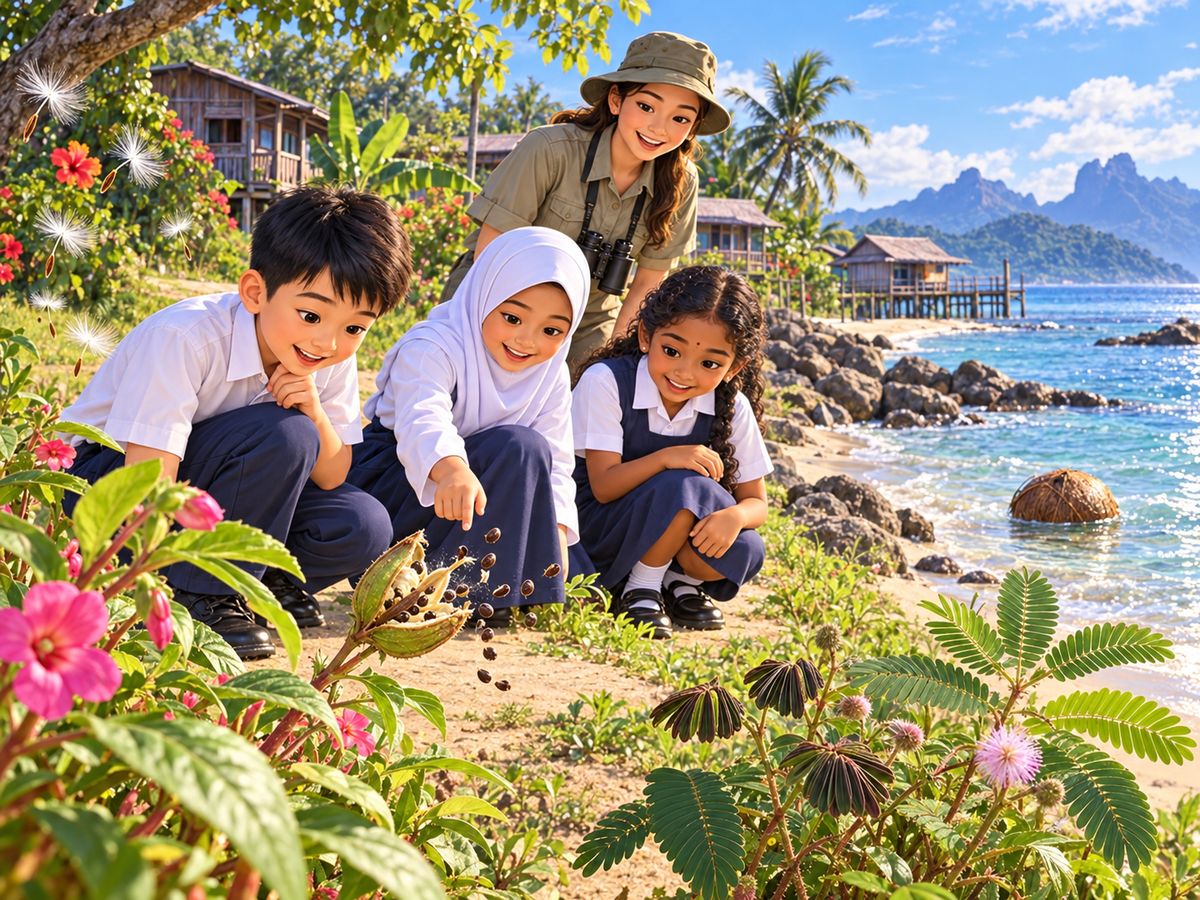
有些植物的果实成熟后会变得干瘪(干枯收缩),然后自动爆裂,把种子弹射到远处,例如凤仙花、羊角豆、相思豆、橡胶、凤凰木和臭豆。果荚或外壳干瘪后会突然裂开,种子就被弹射出去。
penyebaran secara letupan = 靠自动爆裂传播
Buah sesetengah tumbuhan menjadi kering dan kecut apabila masak. Kemudian buah itu meletup sendiri dan melontar biji benihnya ke tempat jauh. Contohnya keembung, bendi, saga, getah, semarak api dan petai.
Contoh: Bunyi letupan kecil kadang-kadang kedengaran di ladang getah apabila buahnya pecah.
Awas: Buah mesti kering dahulu sebelum meletup.
dispersal by bursting = 靠自动爆裂传播
The fruits of some plants become dry and shrunken when ripe. They then burst open by themselves and shoot their seeds far away. Examples are the balsam, okra, saga tree, rubber tree, flame tree and petai.
Example: A small popping sound is sometimes heard in a rubber estate when the fruits split open.
Watch out: The fruit must dry out first before it bursts.
靠人类或动物传播
颜色鲜艳、果肉香甜、香味诱人的果实,能吸引人类或动物主动接近,把种子带到远处。木瓜种子数量多、细小坚硬、不能消化,会随着动物的粪便排出;芒果种子太大,不能吞食,会被丢到另一个地方。相思草、梵天花和含羞草的种子长有钩刺,会依附在人类的衣物或动物的毛发上。
penyebaran oleh manusia atau haiwan = 靠人类或动物传播
Buah yang berwarna terang, berisi manis dan berbau harum menarik manusia dan haiwan. Biji betik yang kecil dan keras keluar bersama najis haiwan, manakala biji mangga yang besar dibuang di tempat lain. Biji kemuncup, pulut-pulut dan semalu mempunyai cangkuk yang melekat pada pakaian atau bulu haiwan.
Contoh: Selepas berkelah, kita sering menemui biji kecil yang melekat pada seluar.
Awas: Ada dua cara di sini: dimakan, atau melekat pada badan.
dispersal by humans or animals = 靠人类或动物传播
Fruits with bright colours, sweet flesh and a pleasant smell attract people and animals. Small, hard papaya seeds pass out in animal droppings, while a large mango seed is thrown away somewhere else. Seeds of love grass, Caesar weed and the touch-me-not have hooks that cling to clothes or fur.
Example: After a picnic we often find tiny seeds stuck to our trousers.
Watch out: There are two routes here: being eaten, or hitching a ride.
看特征,预测传播方法
预测传播方法时,要以种子或果实的外形特征作为依据:有薄翅、细毛或伞状结构→靠风力;能浮、有纤维或气室→靠水力;有果荚、成熟后干瘪→靠自动爆裂;鲜艳香甜或长有钩刺→靠人类或动物。
meramal cara penyebaran = 预测传播方法
Untuk meramal cara penyebaran, perhatikan ciri luaran biji benih atau buah. Sayap nipis atau bulu halus menunjukkan angin. Sabut atau ruang udara menunjukkan air. Lenggai yang kering menunjukkan letupan. Warna terang atau cangkuk menunjukkan manusia dan haiwan.
Contoh: Rumput sambau bercangkuk, biji mapel bersayap, kacang pea berlenggai, dan buah water caltrop berkulit kalis air.
Awas: Jangan meneka; sebutkan ciri sebagai bukti ramalan.
predicting dispersal = 预测传播方法
To predict how a plant spreads, look at the outer features of its seed or fruit. Thin wings or fine hairs point to wind. Fibres or air spaces point to water. A dry pod points to bursting. Bright colours or hooks point to humans and animals.
Example: Goosegrass has hooks, maple seeds have wings, peas grow in pods, and the water caltrop has a waterproof hollow shell.
Watch out: Do not guess; name the feature as evidence for your prediction.
种子传播测试台
选一种种子或果实,再选一种测试:吹风、放进水里、等它成熟干瘪或让动物走过。看看哪一种测试能把它传到远处。
penyebaran biji = 种子传播
Pilih satu biji atau buah, kemudian cuba ujian angin, air, kering meletup atau haiwan yang lalu. Hanya satu ujian akan membawa biji itu jauh dari pokok induk. Perhatikan ciri biji atau buah untuk meramal ujian yang berjaya sebelum menekan butang. Cari keempat-empat cara penyebaran.
Contoh: Buah keruing bersayap nipis, jadi ia berpusing dibawa angin seperti baling-baling.
Awas: Ciri biji ialah petunjuk kepada cara penyebarannya.
seed dispersal = 种子传播
Choose one seed or fruit, then try the wind, water, drying and bursting, or a passing animal test. Only one test will carry it far from the parent plant. Look at the features of the seed or fruit to predict the test that works before pressing the button. Find all four ways of dispersal.
Example: The keruing fruit has thin wings, so it spins away in the wind like a propeller.
Watch out: The features of a seed are the clue to how it spreads.
在测试台上,椰子只有在哪一项测试中被传播到远处?为什么?
ruang udara = 气室
Ingat semula ciri buah kelapa. Kulitnya kalis air dan di dalam sabutnya terdapat gentian serta ruang berisi udara. Ciri ini membantu buah itu terapung lama. Buah kelapa juga besar dan berat, tidak bercangkuk dan tidak mempunyai kekopak.
Contoh: Pokok kelapa banyak tumbuh di tepi pantai kerana buahnya dihanyutkan oleh ombak.
air space = 气室
Recall the features of a coconut. Its skin is waterproof and its husk holds fibres and spaces filled with air. These features help the fruit stay afloat for a long time. A coconut is also big and heavy, has no hooks and has no pod.
Example: Coconut trees often grow along beaches because the waves carry their fruit there.
龙爪茅的种子长有许多细小的钩刺。它最可能怎样传播?
biji benih bercangkuk = 有钩刺的种子
Cangkuk kecil berfungsi seperti velkro. Ia mudah tersangkut pada sesuatu yang berbulu atau berkain. Tanya diri sendiri: siapakah yang lalu di sebelah rumput itu dan membawanya pergi tanpa sedar?
Contoh: Anjing yang berlari di padang pulang dengan biji kecil tersangkut pada bulunya.
Awas: Cangkuk bukan ciri untuk terapung atau melayang.
hooked seeds = 有钩刺的种子
Tiny hooks work like Velcro. They catch easily on anything furry or made of cloth. Ask yourself who walks past the grass and carries the seeds away without noticing.
Example: A dog running across a field comes home with little seeds caught in its fur.
Watch out: Hooks are not a feature for floating or gliding.
动植物确保物种生存的重要性
每种动物或植物的存在都对自然环境有所贡献,任何一个物种无法繁衍,都可能造成生态危机。确保物种生存很重要,因为:①动植物是其他生物的食物来源;②可以避免物种灭绝;③可以维持生态平衡(例如植物吸收二氧化碳、释放氧气)。
kepentingan kemandirian spesies = 物种生存的重要性
Setiap haiwan dan tumbuhan menyumbang kepada alam semula jadi. Kemandirian spesies penting kerana haiwan dan tumbuhan menjadi sumber makanan bagi organisma lain. Ia juga mengelakkan kepupusan dan mengekalkan keseimbangan alam, contohnya tumbuhan menyerap karbon dioksida dan membebaskan oksigen.
Contoh: Pokok rambutan yang berbuah memberi makanan kepada monyet, manakala singa memburu rusa yang makan rumput.
Awas: Ingat tiga kata kunci: makanan, kepupusan, keseimbangan.
importance of species survival = 物种生存的重要性
Every animal and plant contributes something to nature. Species survival matters because animals and plants are a food source for other living things. It also prevents extinction and keeps nature in balance, for example plants take in carbon dioxide and give out oxygen.
Example: A fruiting rambutan tree feeds monkeys, while lions hunt deer that eat grass.
Watch out: Remember three key ideas: food, extinction, balance.
如果物种无法生存会怎样?
如果某种植物无法传播种子,数量会越来越少。吃这种植物的动物会失去食物来源,数量也跟着减少;捕食这些动物的动物也会受影响。食物链和食物网里的生物互相牵连,一个物种消失,整个生态平衡都可能被打乱。
kesan kepupusan = 物种消失的影响
Jika sejenis tumbuhan tidak dapat menyebarkan biji benihnya, bilangannya akan berkurang. Haiwan yang memakannya kehilangan sumber makanan dan turut berkurang. Pemangsa kepada haiwan itu pula terjejas. Dalam siratan makanan, kehilangan satu spesies boleh menggugat seluruh keseimbangan.
Contoh: Jika sejenis pokok buah hilang dari hutan, burung enggang yang bergantung padanya akan kelaparan.
Awas: Gunakan rantai makanan untuk menjelaskan kesan berantai.
effects of losing a species = 物种消失的影响
If a plant cannot spread its seeds, its numbers will fall. Animals that eat it lose a food source and decrease too. The predators of those animals are then affected. In a food web, losing one species can upset the whole balance.
Example: If one kind of fruit tree vanished from a forest, the hornbills that depend on it would go hungry.
Watch out: Use a food chain to explain the knock-on effects.
如果某种植物无法传播种子而渐渐消失,以吃它为生的动物会怎样?
rantai makanan terjejas = 食物链受影响
Mulakan daripada tumbuhan sebagai pengeluar dalam rantai makanan. Jika pengeluar itu hilang, haiwan yang memakannya tidak mendapat cukup makanan. Pilih jawapan yang menerangkan perubahan pertama yang dialami oleh haiwan tersebut.
Contoh: Jika rumput di padang kering dan mati, rusa yang meragut di situ sukar mencari makanan.
Awas: Haiwan tidak boleh bertukar menjadi pengeluar.
food chain affected = 食物链受影响
Start from the plant as the producer in a food chain. If that producer disappears, the animals that eat it cannot get enough food. Pick the answer that describes the first change those animals face.
Example: If the grass in a field dries up and dies, the deer that graze there struggle to find food.
Watch out: Animals cannot turn into producers.
植物:学完了!
本课学习了:植物的物种生存:植物的自卫方法、植物适应气候和季节转换的方法、植物的传播方法、动植物确保物种生存的重要性。接下来做加强练习,巩固所学的科学知识吧!
开始加强练习 →ringkasan tumbuhan = 植物小结
Tumbuhan melindungi diri dengan duri, getah, bulu halus, toksin dan bau busuk. Untuk menghadapi iklim dan perubahan musim, tumbuhan mempunyai ciri seperti gugur daun, kulit tebal, daun berbentuk jarum, akar panjang, batang berlilin, batang menyimpan air, daun bergulung, bulu halus, daun bulu pelepah dan batang lentur. Biji benih disebarkan oleh angin, air, letupan, atau manusia dan haiwan.
Contoh: Kelapa mempunyai daun bulu pelepah dan batang lentur untuk angin kencang, dan buahnya disebarkan oleh air.
Awas: Kemandirian spesies memastikan sumber makanan, mengelakkan kepupusan dan mengekalkan keseimbangan alam.
summary of plants = 植物小结
Plants defend themselves with thorns, latex, fine hairs, toxins and bad smells. To cope with climate and changing seasons, they have features such as shedding leaves, thick bark, needle-shaped leaves, long roots, waxy stems, water-storing stems, curled leaves, fine hairs, feather-like leaves and flexible stems. Seeds are spread by wind, water, bursting, or humans and animals.
Example: A coconut palm has feather-like leaves and a flexible trunk for strong winds, and its fruit is spread by water.
Watch out: Species survival keeps food sources, prevents extinction and maintains the balance of nature.